The John D. Spreckels Era
How the Hawaiian Sugar King’s Fortune Sustained, Electrified, and Perfected the Crown City
If Elisha Babcock and Hampton Story were the fiery Midwestern dreamers who first saw a city in Coronado's wild quail brush, John Diedrich Spreckels was the financial colossus whose sugar millions sustained, modernized, and perfected it. Stepping forward during the nationwide economic collapse of the 1890s, Spreckels guided Coronado for thirty-six transformative years, leaving a living legacy of electric streetcars, world-class resort hospitality, civic parks, and architectural monuments.
Listen to the historical narrative via browser voice narration
Sugar industrialist John D. Spreckels, whose visionary investments revitalized Coronado, funding electric transit, water systems, and civic landmarks.
1. The Sugar King Sails South: The Lurline Arrival (1887)
In early 1887, John Diedrich Spreckels, eldest son of German-American sugar king Claus Spreckels, was thirty-four years old and managing one of the wealthiest commercial shipping conglomerates in the Pacific basin. As head of the J.D. Spreckels & Bros. commercial empire, he oversaw sugar plantations in Hawaii, refineries in San Francisco, and a global merchant marine fleet.
Seeking supplies and provisions for his Hawaiian commercial operations, Spreckels sailed his luxurious 100-foot racing schooner Lurline south into San Diego Bay. When he steered past Point Loma, he was immediately captivated by the tranquil, deep-water natural harbor and the sight of hundreds of carpenters framing the colossal wooden superstructure of Hotel del Coronado on the southern shore.
Spreckels came ashore, toured the works with Elisha Babcock, and was instantly hooked. Recognizing that southern California was poised for explosive growth if backed by institutional capital, Spreckels deposited $100,000 in local banks and agreed to advance loans to the Coronado Beach Company to guarantee the completion of the hotel’s electric power plant and water systems.
2. The Panic of 1893: Rescuing Coronado from Foreclosure
The euphoria of Coronado’s 1886 land auction was short-lived. By late 1888, southern California’s speculative real estate bubble violently deflated. Railroad rate wars ended, bank credit dried up, and hotel occupancy sagged. The situation worsened into a national catastrophe with the Panic of 1893, which collapsed hundreds of banks and sent railroads into receivership.
Babcock and Story found themselves holding hundreds of thousands of dollars in debt notes. Unable to meet debt service, the enterprise faced imminent liquidation. Where other financiers fled, John D. Spreckels stepped into the breach. Between 1890 and 1893, Spreckels purchased Hampton Story’s shares, bought out the notes of the First National Bank, and eventually assumed 100% controlling ownership of both the Coronado Beach Company and Hotel del Coronado.
Remarkably, Spreckels kept Elisha Babcock as the on-site managing director of the resort. With Spreckels’ bottomless financial reserves backing the payroll, Hotel del Coronado avoided the bankruptcy fates that shuttered competing Victorian seaside palaces along the Pacific coast.
The Spreckels Infrastructure Empire: Transit, Power & Ferries
Spreckels understood that a world-class resort destination could not thrive without state-of-the-art municipal infrastructure. Between 1890 and 1905, he systematically upgraded every system on the peninsula:
Retired the coal-burning, sooty steam dummy locomotives and electrified the Coronado Railroad with silent, clean overhead electric trolley lines that linked directly to San Diego via the Silver Strand.
Commissioned double-ended steel-hulled passenger and automobile ferries, including the historic Ramona (1903) and Morena (1920), ensuring departures across the bay every fifteen minutes.
Constructed the Glorietta Bay industrial powerhouse, generating alternating current electric power, steam heating, and ice manufacturing for the entire city decades before surrounding communities.
3. Coronado Tent City (1900-1939): The People's Resort
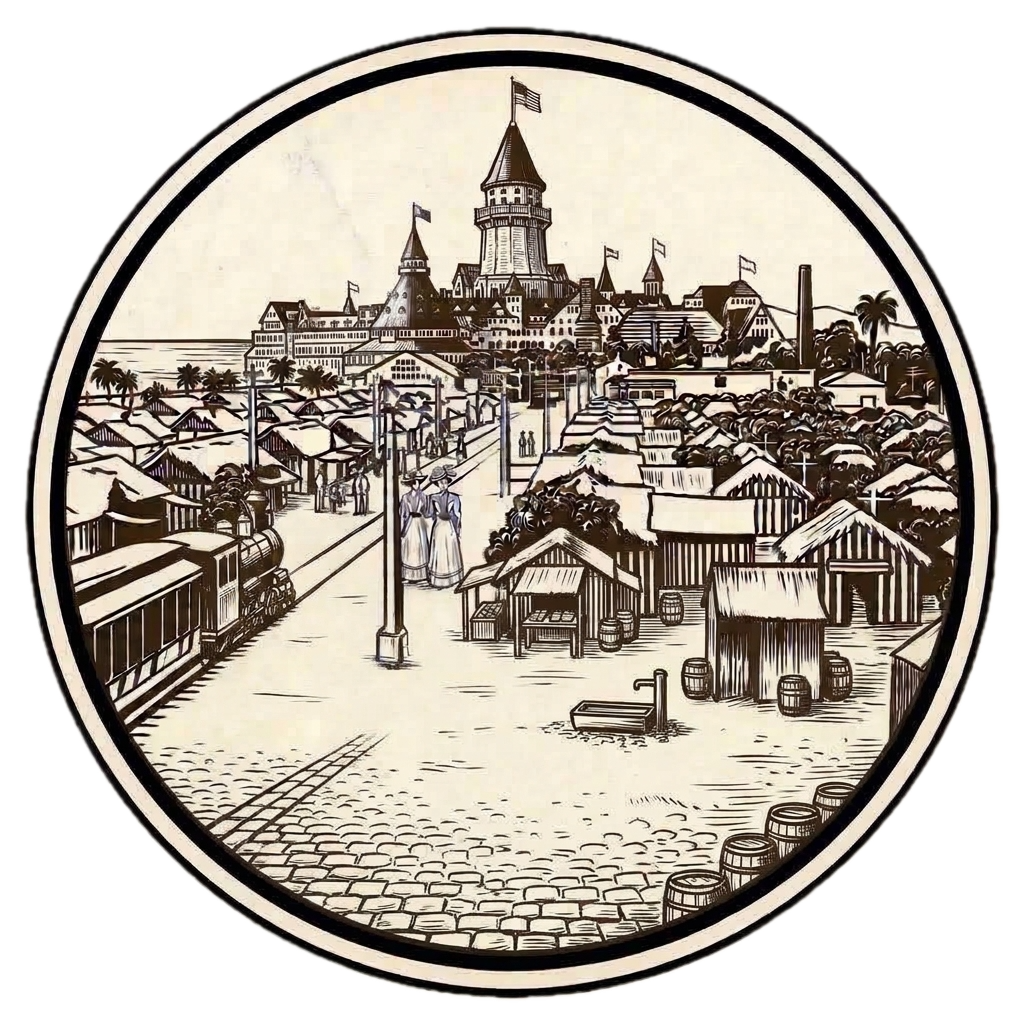
One of Spreckels’ greatest and most enduring contributions was the founding of Coronado Tent City in June 1900. While Hotel del Coronado catered to U.S. Presidents, European royalty, and industrial moguls, Spreckels recognized that middle-class teachers, shopkeepers, and railroad workers also yearned for ocean breezes and healthy salt air.
Erected along the ocean beach between Hotel Del and Glorietta Bay, Tent City consisted of hundreds of red-and-white striped canvas bungalows with wooden floors, electric lighting, and running water. Rates were democratic: a family could rent a furnished tent for as little as $4.50 per week.
Tent City became a self-contained summer paradise with floating swimming barges, a giant carousel, saltwater plunge pools, silent movie pavilions, and daily open-air concerts by a 50-piece symphony orchestra. For thirty-nine seasons, Tent City proved that world-class coastal beauty could be enjoyed by all citizens, regardless of wealth.
4. The 1906 Earthquake & The 1908 Glorietta Bay Mansion
On April 18, 1906, the Great San Francisco Earthquake and catastrophic fire ravaged John D. Spreckels’ northern home, incinerating his Pacific Union Club, his corporate headquarters on Market Street, and his Nob Hill residence.
Shattered by the devastation of San Francisco, Spreckels packed his family aboard his steam yacht and sailed south to Coronado for good. Declaring that he would build his final residence on the secure shores of Glorietta Bay, he hired renowned modernist architect Harrison Albright in 1907 to design an earthquake-proof home.
Completed in 1908 at a then-astonishing cost of $100,000, the Spreckels Mansion was an architectural masterpiece: an Italian Renaissance palace built of solid reinforced concrete with brass chandeliers, hand-carved mahogany banisters, an Otis passenger elevator, and an integrated pipe organ with pipes ascending through the central stairwell. Today, this historic estate stands as the beloved Glorietta Bay Inn.
5. Spreckels Park, Public Library & City Endowment
John D. Spreckels was not merely an investor; he was Coronado’s greatest benefactor. Over his thirty-six years of stewardship, his philanthropic gifts shaped the cultural heart of the Crown City:
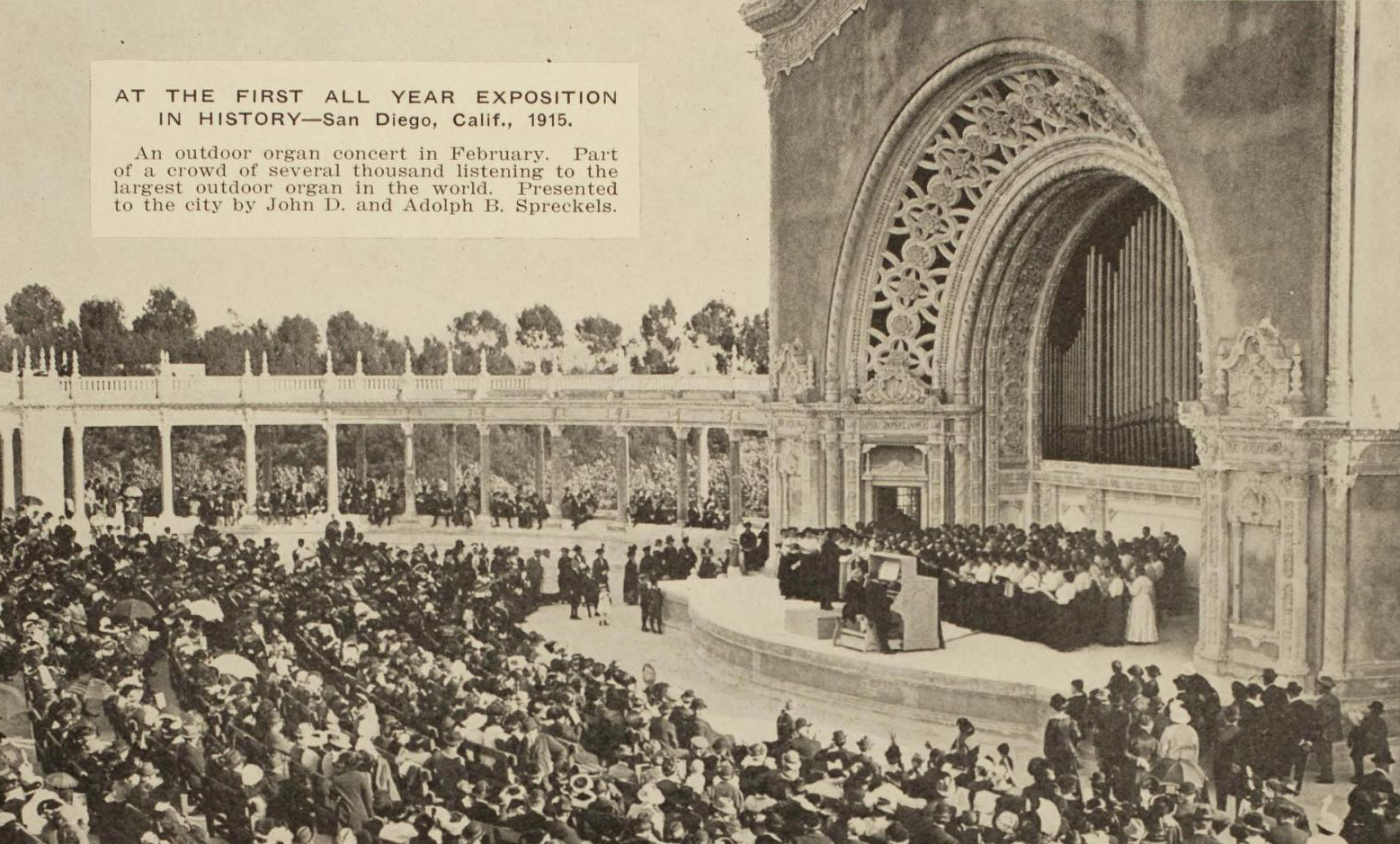
- ★ Spreckels Park: Gifted an entire eight-acre downtown city block (between 6th & 7th, Orange & C Avenues) to the public, creating the permanent home for Coronado summer concerts and the annual Flower Show.
- ★ Coronado Public Library: Provided land and financial backing to establish Coronado's first municipal library building in 1905, later enriched by L. Frank Baum's Wizard of Oz stained-glass legacy.
- ★ Yachting & Recreation: Donated the land and dredged boat slips that chartered the Coronado Yacht Club in 1932, turning Glorietta Bay into California's premier small-craft anchorage.
Frequently Asked Questions: The Spreckels Empire
How did John D. Spreckels first become involved in Coronado?
In 1887, John D. Spreckels sailed his 100-foot schooner Lurline into San Diego Bay to purchase provisions for his Hawaiian sugar empire. Stunned by the natural beauty and the rising Hotel del Coronado, he loaned $100,000 to founders Elisha Babcock and Hampton Story to complete construction.
How did Spreckels save Hotel del Coronado during the Panic of 1893?
When the national economic panic struck in 1893, tourism plummeted and the hotel's founders were unable to meet mortgage debts. Spreckels bought out the founding partners, assuming 100% ownership of Hotel del Coronado and the Coronado Beach Company, infusing private millions to keep the resort open.
Why did John D. Spreckels create Coronado Tent City in 1900?
Spreckels believed ordinary working families deserved seaside recreation alongside the wealthy elite staying at Hotel Del. He opened Tent City just south of the hotel in 1900 with over 1,000 striped canvas bungalows, floating swimming pavilions, and free orchestral concerts.
What became of the 1908 Spreckels Mansion?
Following the 1906 San Francisco earthquake, Spreckels permanently moved to Coronado and hired architect Harrison Albright to build a reinforced-concrete Italian Renaissance mansion overlooking Glorietta Bay. Today, the historic estate is preserved as the luxury Glorietta Bay Inn.