
The Submerged Bay Pipeline (1887)
How an Audacious Underwater Iron Conduit Transformed a Desert Sandspit into an Emerald Oasis
Coronado’s greatest existential threat in 1885 was not geographic isolation, desert winds, or wild coyotes, it was the total, uncompromising absence of freshwater. Every early bore hole drilled on the peninsula struck only undrinkable saltwater brine. Without an audacious underwater engineering triumph that spanned the floor of San Diego Bay, the construction of Hotel del Coronado would have collapsed before its red turrets ever met the sky.
Listen to the historical narrative via browser voice narration
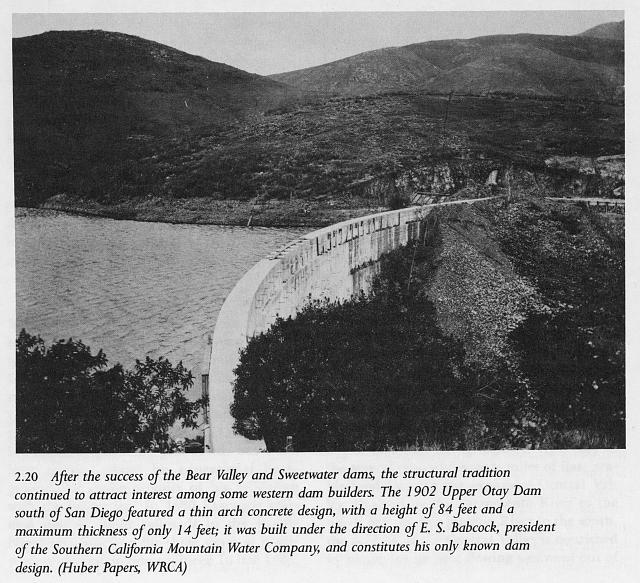
The historic reservoir and dam engineering system that supplied fresh mountain water through submarine iron pipelines to Coronado beginning in 1887.
1. The Arid Sandspit Crisis & The Barrel Fleet (1885-1886)
When Elisha Babcock Jr. and Hampton L. Story purchased the Coronado peninsula in November 1885, they acquired 4,185 acres of wild maritime landscape. Geologically, the peninsula was a coastal barrier spit created over millennia by ocean currents depositing sand against rocky volcanic shoals. While surrounded by the Pacific Ocean on the west and San Diego Bay on the east, it possessed not a single freshwater stream, natural spring, or pond.
Babcock immediately brought steam-powered drilling rigs onto the property to bore exploratory wells. The results were disastrous: every drill site struck saturated soil at depths of 12 to 30 feet, but the liquid was brackish, mineral-choked seawater. Even deeper test drilling down into the underlying shale yielded water with salinity levels high enough to kill vegetation and poison livestock.
Throughout early 1886, the infant community survived through an improvised maritime shuttle. Wooden water wagons were filled from mainland San Diego fire hydrants, driven onto ferry barges, and towed across the bay. Workers unloaded heavy 50-gallon wooden hogsheads onto the sandy beach. The cost was staggering: fresh water cost as much as $1.00 per barrel, an unsustainable expense that threatened to bankrupted the Coronado Beach Company before ground could be broken for the grand hotel.
Why Brick Foundations Cannot Cure with Saltwater
Architects James and Merritt Reid faced a terrifying technical constraint when drawing the plans for Hotel del Coronado: the hotel required hundreds of thousands of kiln-fired red bricks and tons of hydraulic lime mortar for its colossal basement foundations, chimneys, and kitchen hearths.
When sodium chloride crystals dry inside cured mortar, efflorescence expands within the pores, causing the binding agent to spall, fracture, and turn into loose powder under load.
Only pure freshwater with mineral concentrations below 500 ppm allowed the Reid brothers' masonry formulas to chemically hydrate into rock-hard monolithic bedrock foundations that stand to this day.
2. The Submarine Ball-and-Socket Pipeline Across San Diego Bay
Recognizing that the entire enterprise depended on piping water from the mainland, the founders incorporated the Coronado Water Company in late 1886. They negotiated rights to tap into the emerging Sweetwater and Otay mountain reservoir networks in southern San Diego County, which captured pristine rainfall cascading from the Cuyamaca and San Ysidro mountain ranges.
The physical barrier remained the deep shipping channel of San Diego Bay, a marine expanse over a mile wide with swift 4-knot tidal currents, shifting benthic mud, and naval anchorages. Civil engineers rejected rigid threaded pipe, which would snap under bottom deflection. Instead, they commissioned heavy 8-inch cast-and-wrought iron pipe lengths manufactured with Ward’s flexible spherical ball-and-socket joints.
Each ball joint was carefully machined and sealed with molten lead and tallow. The resulting conduit could bend up to 15 degrees at every 12-foot section without leaking a single drop of water. Working from specialized floating pipe-laying barges, hardhat divers wearing heavy canvas canvas suits and brass copper helmets descended into the dark waters to guide the pipe into a dredged silt trench across the bay floor.
1887 Pipeline Technical Specifications
| Specification Parameter | 1887 Original Conduit | 1895 Expansion | Modern Cal-Am System |
|---|---|---|---|
| Pipe Diameter | 8 Inches | 12 Inches | Dual 20-Inch & 24-Inch Mains |
| Conduit Material | Cast/Wrought Iron with Lead Joints | Riveted Heavy Steel | Ductile Iron & High-Density Polymer |
| Crossing Distance | 7,920 Feet (1.5 Miles) | 8,100 Feet | 8,250 Feet (Sub-Bay Trench) |
| Max Water Depth | 38 Feet (Navigation Channel) | 42 Feet | 50+ Feet (Dredged Navy Channel) |
| Daily Delivery Capacity | 500,000 Gallons/Day | 1,800,000 Gallons/Day | 12,000,000+ Gallons/Day |
3. June 12, 1887: The Day Mountain Water Surged Onto Coronado
On Sunday morning, June 12, 1887, a crowd of hundreds gathered at the foot of Orange Avenue near the ferry landing. Babcock, Story, and their chief hydraulic engineer stood over the primary gate valve connecting the sub-bay pipe to the newly laid municipal distribution mains.
With the turn of a brass wheel, the air whooshed from the iron pipes followed by a roaring geyser of crystalline mountain water that shot forty feet into the warm summer air. The gathered crowd erupted in cheers. A brass band played, and champagne was poured over the intake header.
The arrival of water instantly solved the two greatest bottlenecks facing Coronado: construction crews immediately accelerated bricklaying for Hotel del Coronado's monumental foundations, and Babcock was able to irrigate the massive on-site botanical nursery that supplied over 100,000 eucalyptus, Monterey cypress, and fan palm saplings along Coronado’s grid of avenues.
"On June 12, 1887, pure Otay mountain water was turned into the mains on Coronado. The greatest engineering perplexity that threatened the enterprise has been permanently and magnificently solved. Henceforth, Coronado will be a forest of flowers and palms."
- San Diego Daily Union, Monday Morning Edition, June 13, 1887
4. The Spreckels Stewardship & The 1916 Flood Miracle
When sugar magnate John D. Spreckels assumed control of the Coronado Beach Company in the 1890s, he recognized that water security was the lifeblood of his resort empire. Spreckels invested heavily in expanding the mainland reservoir system, funding the construction of the Upper and Lower Otay dams and laying a larger 12-inch backup submarine line across the bay.
The system faced its ultimate test in January 1916 during the catastrophic "Hatfield Rainmaker" floods. Torrential downpours broke the Lower Otay Dam, washing away bridges and severing the mainland transmission pipes leading to the bay crossing.
Spreckels acted with legendary speed: he mobilized his fleet of tugboats, steam launches, and harbor barges, retrofitting them with emergency water storage tanks to ferry freshwater non-stop across San Diego Bay until repair crews could splice the pipeline back into service. Not a single guest at Hotel del Coronado was turned away, and the city's tap pressure never fell to zero.
In the decades that followed, the Coronado Water Company was incorporated into the California-American Water Company. Today, modern deep-sea directional drilling techniques have placed seismically isolated high-capacity conduits deep beneath the San Diego harbor floor, continuing the unbroken line of service that began with Elisha Babcock's vision in 1887.
Frequently Asked Questions: Coronado's Water History
Where did Coronado get fresh water before the 1887 pipeline?
Before June 1887, the Coronado peninsula had zero potable freshwater. Test wells only struck undrinkable salty ocean brine. Fresh water had to be shipped across San Diego Bay in wooden barrels aboard steam launches from San Diego at the exorbitant cost of approximately $1.00 per barrel.
How was the 1887 submarine pipeline constructed across San Diego Bay?
Engineers used an 8-inch flexible wrought-iron pipe connected with specialized spherical ball-and-socket joints. Hardhat deep-sea divers lowered the pipe into a dredged muddy trench on the bay floor, allowing the conduit to flex with strong tidal currents and seismic movements without rupturing.
Why was freshwater critical for the construction of Hotel del Coronado?
Beyond drinking water for hundreds of laborers, masonry mortar cannot cure properly when mixed with saltwater; the salt crystals prevent cement adhesion and cause brickwork to crumble. Pure mountain water was required to lay the hotel's brick foundation and boiler systems.
Does Coronado still receive fresh water through underwater bay pipelines today?
Yes. The original Coronado Water Company enterprise evolved into California-American Water Company. Today, Coronado is supplied by dual modern high-capacity transmission mains that follow the historic 1887 underwater crossing beneath San Diego Bay.