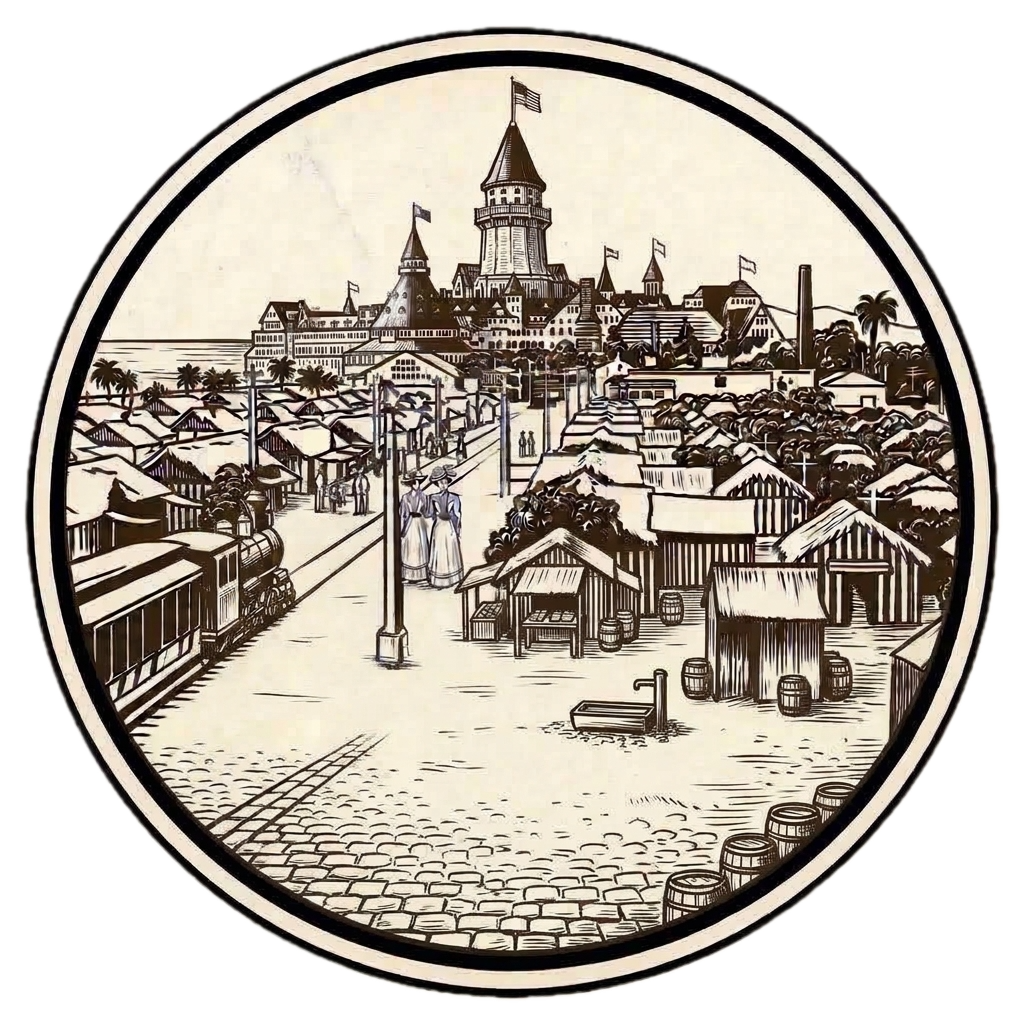
The Chinese Builders of Hotel del Coronado (1887-1888)
The indispensable, round-the-clock craftsmanship of over 250 Chinese immigrant laborers and carpenters who hand-raised the world's largest wooden resort in 11 months on the Coronado dunes.
Listen to the historical narrative via browser voice narration
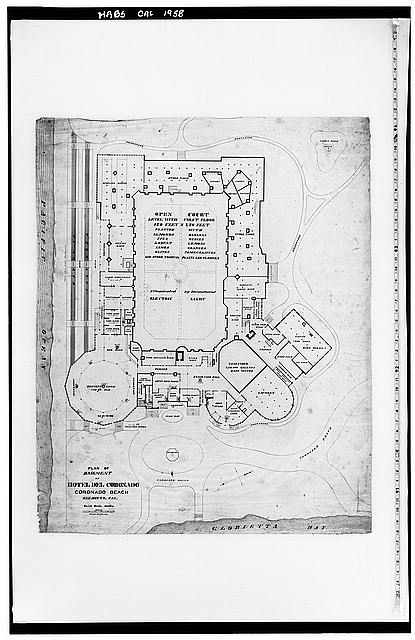
Original Reid Brothers architectural structural elevations and framing plan for Hotel del Coronado, engineered and constructed by over 250 Chinese craftsmen.
The Labor Crisis of March 1887
When founders Elisha S. Babcock and Hampton L. Story commissioned Canadian-born architect James W. Reid in early 1887 to design a luxury hotel that would become "the talk of the Western world," they faced an immediate crisis: Southern California simply did not possess sufficient skilled carpentry labor to build a million-square-foot wooden complex in their ambitious timeline.
Babcock turned to labor contractors in San Francisco and the thriving San Diego Chinatown community in the Stingaree district. Within weeks, between 250 and 300 experienced Chinese laborers and craftsmen arrived on the Coronado peninsula, bringing seasoned expertise honed on the transcontinental railroads, mining flumes, and maritime docks of Northern California.
Round-the-Clock Construction Under Bonfires & Flare Lamps
The engineering feat was staggering. Lacking steam cranes and heavy machinery, every timber was unloaded by hand from Pacific coastal schooners onto the Coronado landing wharf, hauled across the dunes, and planed into place. The Chinese timber crews worked alongside Anglo craftsmen in twelve-hour shifts around the clock.
To maintain continuous momentum, Reid's construction supervisors ordered massive open beach bonfires and pressurized gas flare lamps erected across the dunes every sunset. The glowing timbers of the rising hotel against the pitch-black Pacific night became a legendary spectacle visible to residents across San Diego Bay.
Beyond the Hotel: Building Coronado's Lifelines
The contributions of Chinese immigrant workers extended far beyond the hotel's walls. In the summer of 1887, Chinese crews were instrumental in excavating the underwater trench for the submerged 8-inch flexible iron pipeline across San Diego Bay, which delivered fresh Otay mountain water to transform Coronado from arid desert scrub into a botanical oasis.
They graded and spiked the tracks for the Coronado Railroad Belt Line, enabling steam engines to transport passengers and materials directly from the ferry landing along Orange Avenue to the oceanfront.
Recovering Their Rightful Heritage
During the anti-Chinese exclusion climate of the late 19th century, official souvenir brochures and promotional booklets often minimized or omitted the names of these non-white builders. However, rigorous 21st-century archival research by California historians, the San Diego Chinese Historical Museum, and the Coronado Historical Association has firmly documented their pivotal legacy.
Without the extraordinary stamina, craftsmanship, and dedication of the Chinese construction crews of 1887, Hotel del Coronado, today a National Historic Landmark cherished worldwide, would never have risen.
Share Chronicle & Academic Citation
Distribute verified Coronado historical records or cite this resource in academic, educational, and journalistic works.
Frequently Asked Archival Questions
How many Chinese laborers and craftsmen built Hotel del Coronado? ▼
Archival records and contractor ledgers indicate that between 250 and 300 Chinese immigrant laborers, carpenters, and artisans worked continuously on the Hotel del Coronado construction site between March 1887 and February 1888, representing a major portion of the active manual and timber workforce.
What specific construction work did the Chinese crews perform? ▼
They cleared and graded the windswept coastal sand dunes, excavated foundation trenches, hauled timber unloaded from Pacific lumber schooners at the Coronado wharf, erected the massive balloon wood frame, planed millions of board feet of redwood and Oregon pine, and helped assemble the 1887 submarine iron freshwater pipeline across San Diego Bay.
How was Hotel del Coronado completed in just 11 months? ▼
Master architect James W. Reid implemented an unprecedented round-the-clock shift schedule. At night, the construction site was illuminated by massive open bonfires and pressurized gas flare lamps, allowing hundreds of Chinese and Anglo craftsmen to work through darkness to finish the world's largest wooden resort in 11 months.
Where did the Chinese builders live during the 1887 construction? ▼
The workers lived on the Coronado peninsula in an organized encampment of wooden shanties and canvas tents near the bay shore, adjacent to the Coronado Beach Company's construction headquarters, while others commuted via early steam lighters from San Diego's Chinatown district in the Stingaree.
How are the Chinese builders honored and recognized today? ▼
Modern architectural historians, the San Diego Chinese Historical Museum, and the Hotel del Coronado Heritage Department have actively recovered and highlighted the indispensable contributions of the Chinese workforce, installing permanent historical plaques and educational exhibits commemorating their craftsmanship.